
Fabric, GSM & Material Planning for Custom Apparel
Fabric Sourcing & GSM Customization for Apparel Brands
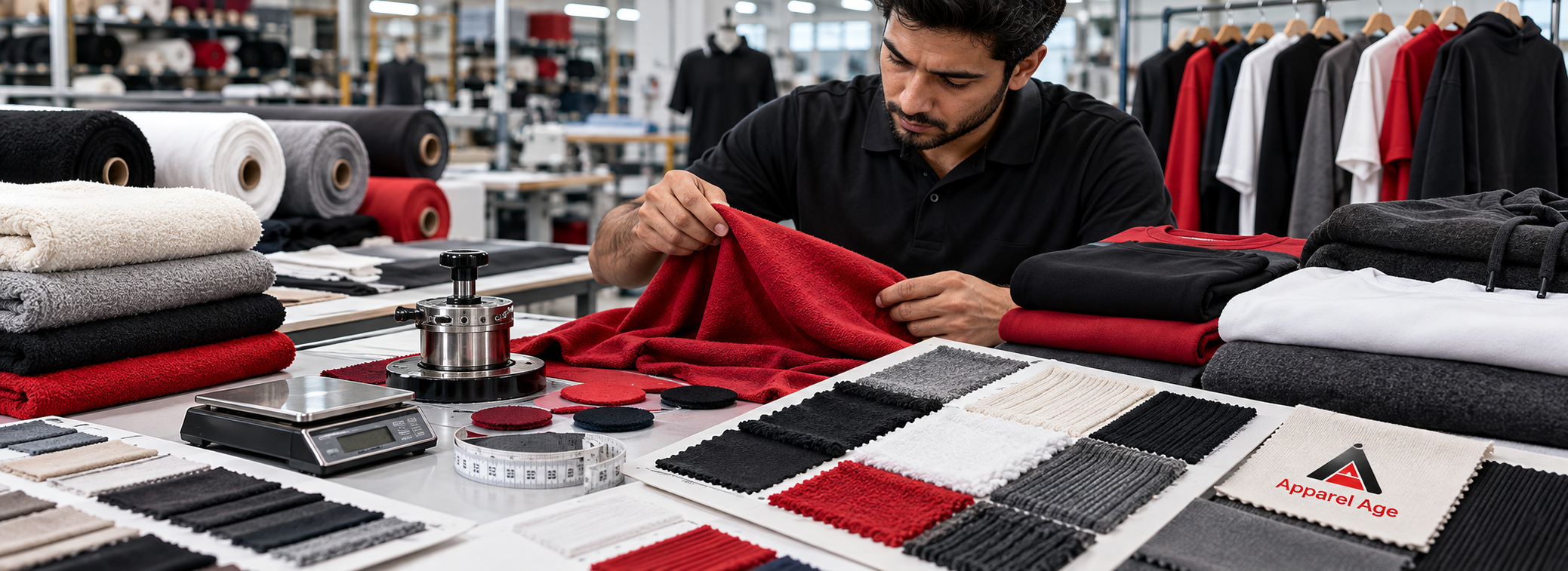
Apparel Age Clothing supports USA and international clothing brands with fabric sourcing and GSM customization from Sialkot, Pakistan. Fabric composition, weight, texture, stretch, hand feel, shrinkage, decoration compatibility, and garment construction can all influence how a finished product looks and performs. These decisions are especially important for custom hoodies, t-shirts, sweatshirts, joggers, sportswear, blanks, streetwear, and private-label apparel.
Fabric Planning Can Include
- Cotton, fleece, French terry, jersey, polyester, blends, and performance fabrics
- GSM planning for lightweight, midweight, and heavyweight garments
- Stretch, shrinkage, softness, structure, and hand feel review
- Fabric selection around printing, embroidery, washing, and construction
- Sample evaluation before bulk production
When Fabric Sourcing & GSM Planning Matters Most
Fabric selection affects more than garment weight. It can influence fit, drape, warmth, opacity, stretch, shrinkage, decoration quality, wash behavior, and how the product feels to the customer. Buyers developing a new garment should therefore consider material choices alongside construction and end use instead of selecting fabric by GSM alone.
Good Applications
- Streetwear brands developing structured hoodies or tees
- Startups selecting fabric before an initial sample
- Private-label brands building custom apparel collections
- Sportswear projects requiring stretch or performance characteristics
- Blank apparel programs focused on repeatable fabric weight and feel
- Garments planned for dye, wash, or vintage-style finishing
When Additional Planning May Not Be Needed
- Orders already using an approved fabric specification
- Projects without a defined garment type or target product feel
- Requests to duplicate another brand's protected proprietary material
- Orders where the buyer does not intend to evaluate material before bulk production
- Projects where fabric weight, performance, and budget expectations conflict
Typical B2B Buyers
- USA apparel startups
- Streetwear and private-label brands
- Sportswear and gym apparel buyers
- Ecommerce clothing businesses
- Wholesalers and blank apparel buyers
Product Categories Where Fabric & GSM Decisions Matter
Different garments require different material behavior. A structured hoodie may benefit from a very different fabric choice than a drapey t-shirt, stretch legging, lightweight training top, or blank intended for further decoration.
Hoodies & Sweatshirts
Fleece, French terry, brushed fabrics, rib components, shrinkage behavior, warmth, structure, and the desired hand feel should be considered together, especially for oversized and streetwear silhouettes. View Hoodies and Sweatshirts.
T-Shirts & Tops
Cotton jersey, blends, softness, opacity, drape, stretch, shrinkage, print compatibility, and intended fit can all influence fabric selection for tees, polos, long sleeves, tanks, and cropped tops. See Tees and Tops.
Bottoms
Joggers, sweatpants, shorts, cargos, and leggings can require careful consideration of stretch, recovery, durability, waistband construction, opacity, and fabric stability. Explore Bottoms.
Blanks
Blank apparel programs benefit from consistent decisions around fabric weight, hand feel, shrinkage, color behavior, decoration compatibility, and repeat production. See Blanks.
Fabric & GSM Factors Buyers Should Evaluate
For GSM customization for apparel, weight is only one part of the specification. Fiber composition, knit or weave structure, finishing, stretch, recovery, shrinkage, surface texture, decoration method, and garment construction also influence the final product.
Fabric Composition
Cotton, polyester, spandex blends, fleece, French terry, jersey, rib, and performance materials behave differently during cutting, stitching, decoration, washing, and wear. Composition should therefore match the garment's intended function.
GSM and Fabric Weight
GSM describes fabric weight in grams per square meter. A higher or lower GSM can influence thickness, drape, warmth, opacity, structure, shipping weight, and overall garment feel, but the number should always be considered together with the fabric construction.
Shrinkage & Wash Behavior
Fabric can change in dimension, texture, color, or hand feel after laundering, dyeing, or finishing. Pattern measurements and garment samples should account for expected material behavior before bulk production.
Decoration Compatibility
Fabric surface, fiber content, stretch, thickness, and heat sensitivity can affect screen printing, DTG, DTF, embroidery, sublimation, patches, and wash effects. The decoration method should be considered before the material specification is finalized.
Trims & Construction
Rib cuffs, waistbands, drawcords, zippers, buttons, eyelets, and other components should work with the garment's fabric weight, structure, stretch, and intended use. Review Custom Trims & Accessories for related branded component planning.
MOQ Planning
Apparel Age Clothing's confirmed MOQ is 10-50 Pcs. Fabric choice, product type, sizing, decoration, trims, and other customization requirements can influence how an individual order is planned.
How Fabric Weight Changes the Character of a Garment
The same silhouette can look and feel significantly different when produced in another fabric or weight. Buyers should consider season, climate, fit, structure, decoration, wash treatment, retail positioning, and expected customer use when choosing material.
Heavyweight Apparel
Heavier fabrics can provide more structure, density, warmth, and a substantial hand feel. These characteristics are often considered for oversized hoodies, sweatshirts, and structured streetwear garments.
Midweight Apparel
Midweight materials can balance structure, comfort, drape, and everyday wearability for many t-shirts, hoodies, joggers, polos, and private-label basics.
Lightweight Apparel
Lighter fabrics may suit warm-weather clothing, layering pieces, training tops, activewear, and selected performance garments where reduced weight and easier movement are priorities.
Evaluate a Sample
A fabric or garment sample can help buyers assess weight, hand feel, stretch, shrinkage, color, decoration behavior, fit, and overall appearance before approving bulk production.
Fabric Sourcing & GSM Customization Workflow
Apparel Age Clothing reviews the product concept, target garment feel, fabric requirements, decoration method, and sample needs before bulk manufacturing. This helps connect material selection with the garment's fit, construction, branding, and end use.
1. Product Review
Garment type, reference details, tech pack information, intended fit, season, use case, and target market can be reviewed to establish the material direction.
2. Fabric & GSM Planning
Fabric composition, weight, stretch, hand feel, shrinkage, wash behavior, structure, and decoration compatibility are considered against the needs of the garment.
3. Sample Development
A sample can help evaluate material feel, fit, construction, decoration results, trims, labels, shrinkage, and the overall appearance before bulk approval.
4. Bulk Production & QC
After approval, the project can move through fabric preparation, cutting, stitching, decoration, inspection, finishing, packing, and dispatch preparation. The confirmed Production Lead Time is 7-10 Days.
Related Services for Fabric-Led Apparel Development
Fabric selection should be coordinated with garment construction, trims, decoration, wash treatments, labels, and final presentation. Reviewing these decisions together can reduce material or construction conflicts later in development.
Cut & Sew Customization
For custom patterns, silhouettes, panels, stitching details, and garment construction, visit Cut & Sew Customization.
Private Label Clothing
Brands developing fabric-led apparel with labels, tags, trims, packaging, and retail finishing can explore Private Label Clothing.
Fabric + Decoration Planning
Material decisions should account for planned printing, embroidery, patches, washing, labels, trims, and finishing because decoration processes can interact differently with different fabric surfaces and fiber compositions.
Fabric Sourcing Support for USA Clothing Brands
Apparel Age Clothing is a B2B custom clothing manufacturer based at Christian Town Road, Sialkot 51310, Pakistan. The company supports USA and international buyers with fabric sourcing, GSM customization, sample development, cut-and-sew production, decoration, private-label apparel, trims, packaging, quality control, and worldwide shipping.
Material Planning
Fabric type, GSM, structure, stretch, shrinkage, softness, decoration requirements, and intended garment use can be considered together before sampling.
Low MOQ Production
The confirmed MOQ is 10-50 Pcs, providing clothing brands and B2B buyers with a practical starting range for custom apparel production.
Production Coordination
Material selection can be coordinated with garment construction, trims, labels, decoration, wash effects, packaging, and other approved production details.
Production & Shipping
Confirmed Production Lead Time is 7-10 Days, and confirmed Shipping Time is 4-12 Days.
Fabric Sourcing & GSM Customization FAQs
What does GSM mean in apparel fabric?
GSM means grams per square meter and is commonly used to describe fabric weight. It does not define quality by itself because fiber composition, knit or weave structure, finishing, softness, stretch, and garment construction also affect the final result.
Can Apparel Age Clothing help choose fabric for hoodies?
Yes. Hoodie material planning can include fleece, French terry, cotton blends, GSM, shrinkage, hand feel, rib components, decoration compatibility, structure, and the intended fit of the finished garment.
What GSM is best for t-shirts?
There is no single GSM that is best for every t-shirt. The appropriate weight depends on fabric composition, season, fit, opacity, desired drape, hand feel, printing method, target customer, and product positioning.
Can fabric selection affect printing or embroidery?
Yes. Surface texture, stretch, thickness, fiber content, heat tolerance, and fabric stability can affect methods such as screen printing, DTG, DTF, embroidery, sublimation, patches, and wash treatments.
Should fabric be sampled before bulk production?
A fabric or garment sample can help evaluate hand feel, weight, stretch, shrinkage, color, decoration performance, construction, sizing, and the overall appearance before a bulk order is approved.
What is the MOQ for custom fabric and apparel production?
Apparel Age Clothing's confirmed MOQ is 10-50 Pcs. Individual project planning can depend on the product type, material, sizing, decoration, trims, and other customization requirements.
How long do production and shipping take?
The confirmed Production Lead Time is 7-10 Days, and the confirmed Shipping Time is 4-12 Days.
Need Fabric Sourcing or GSM Customization?
Take a virtual look at our Sialkot, Pakistan manufacturing facility and explore how custom apparel moves through garment development, cutting, stitching, embroidery, printing, finishing, quality checks, and order preparation. See the production environment behind the custom clothing we manufacture for USA and international B2B apparel buyers.
Business Credentials Behind Apparel Age Clothing
Apparel Age Clothing is a registered apparel manufacturer in Pakistan based in Sialkot, supporting USA and worldwide buyers with custom clothing, team sportswear, private label apparel, blanks, denim, accessories, and export-focused apparel manufacturing services.

SCCI Member
Membership with the Sialkot Chamber of Commerce & Industry supports Apparel Age Clothing’s position as a Sialkot-based apparel manufacturer and exporter.

FBR Registered
FBR registration helps support formal business operations for apparel manufacturing, private label clothing, and export-related buyer requirements.

PSW Registered
Pakistan Single Window registration supports export documentation and international trade processes for apparel orders.

PHMA Member
PHMA membership connects Apparel Age Clothing with Pakistan’s hosiery and garment manufacturing sector, supporting apparel production credibility.
Verified Business Details Matter When Choosing an Apparel Manufacturer
For USA clothing brands, ecommerce stores, sports teams, wholesalers, and private label buyers, business registrations and industry memberships help build confidence before starting sample development, custom apparel production, branding, packing, and worldwide shipping.
Get a Free Quote!